
Dairy Newsletter Summer 2025/26
Posted in: Dairy Animal Services, Newsletters
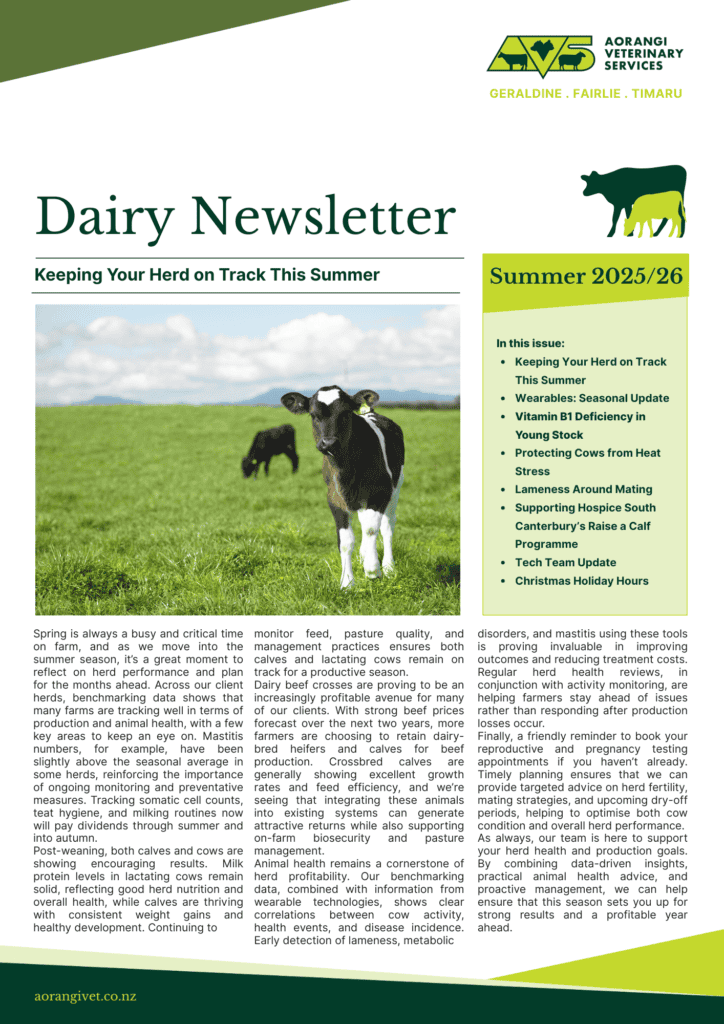
Keeping Your Herd on Track This Summer
Spring is always a busy and critical time on farm, and as we move into the summer season, it’s a great moment to reflect on herd performance and plan for the months ahead. Across our client herds, benchmarking data shows that many farms are tracking well in terms of production and animal health, with a few key areas to keep an eye on. Mastitis numbers, for example, have been slightly above the seasonal average in some herds, reinforcing the importance of ongoing monitoring and preventative measures. Tracking somatic cell counts, teat hygiene, and milking routines now will pay dividends through summer and into autumn.
Post-weaning, both calves and cows are showing encouraging results. Milk protein levels in lactating cows remain solid, reflecting good herd nutrition and overall health, while calves are thriving with consistent weight gains and healthy development. Continuing to In this issue: Keeping Your Herd on Track This Summer Wearables: Seasonal Update Vitamin B1 Deficiency in Young Stock Protecting Cows from Heat Stress Lameness Around Mating Supporting Hospice South Canterbury’s Raise a Calf Programme Tech Team Update Christmas Holiday Hours Dairy Newsletter monitor feed, pasture quality, and management practices ensures both calves and lactating cows remain on track for a productive season.
Dairy beef crosses are proving to be an increasingly profitable avenue for many of our clients. With strong beef prices forecast over the next two years, more farmers are choosing to retain dairybred heifers and calves for beef production. Crossbred calves are generally showing excellent growth rates and feed efficiency, and we’re seeing that integrating these animals into existing systems can generate attractive returns while also supporting on-farm biosecurity and pasture management.
Animal health remains a cornerstone of herd profitability. Our benchmarking data, combined with information from wearable technologies, shows clear correlations between cow activity, health events, and disease incidence. Early detection of lameness, metabolic disorders, and mastitis using these tools is proving invaluable in improving outcomes and reducing treatment costs. Regular herd health reviews, in conjunction with activity monitoring, are helping farmers stay ahead of issues rather than responding after production losses occur.
Finally, a friendly reminder to book your reproductive and pregnancy testing appointments if you haven’t already. Timely planning ensures that we can provide targeted advice on herd fertility, mating strategies, and upcoming dry-off periods, helping to optimise both cow condition and overall herd performance. As always, our team is here to support your herd health and production goals. By combining data-driven insights, practical animal health advice, and proactive management, we can help ensure that this season sets you up for strong results and a profitable year ahead.
Wearables: Seasonal Update
In New Zealand, the dairy industry is increasingly adopting wearable technology to improve cow health, farm management, and overall productivity. The benefits of cow wearables have been particularly noticeable during critical periods such as calving and the spring season, where the demands on cows are at their highest.
During calving, wearable technology helps monitor the cow’s behaviour and health status, providing early detection of health issues and metabolic disorders. This technology tracks parameters such as body temperature, movement patterns, and rumination, offering valuable insights into individual and herd-level cow condition that allow for early intervention. Because many of the factors that influence mating success and pregnancy maintenance are set up well before mating begins, including calving body condition score, minimising condition loss, and managing infectious diseases such as BVD and post-calving metabolic or health challenges, having continuous data during this period is especially valuable. The ability to monitor cows during the high-stress calving and spring periods reduces the need for constant physical checks.
Looking ahead in the season, the application of wearable technology in the areas of mating and pregnancy maintenance is vast. Heat detection remains critical, and by monitoring cow behaviour and physiological signs such as heat cycles, wearables assist in identifying optimal breeding windows, reducing the likelihood of missed mating opportunities and improving herd reproductive performance. Feeding and nutrition also play a significant role in pregnancy maintenance, and wearables provide a useful proxy for these factors: changes in rumination can highlight shifts in pasture quality, feeding management, and whether cows’ nutritional requirements are being met. These insights are crucial for maintaining pregnancy health and supporting ongoing milk production. Alongside this, ensuring appropriate trace element status prior to mating, including the use of tools such as Multimin Evolution can further support reproductive success and overall pregnancy outcomes.
As the dairy industry continues to embrace wearable technology, it holds promise for more sustainable and efficient farming practices, ensuring healthier cows and higher productivity.
Vitamin B1 Deficiency in Young Stock
As we head into the summer, we start to see cases of Vitamin B1 deficiency (also know as Thiamine deficiency or Polioencephalomalacia) in our weaned calves.
Cattle have a daily Vitamin B1 requirement, which is usually provided by the bacteria in their rumen. Like most B vitamins, thiamine is not stored in the body. If calves have a change in diet, especially changing from a stalky, high dry matter diet to a lush, lower fibre diet, as this encourages proliferation of the thiaminase enzyme producing bacteria that break down the Vitamin B1 the rumen, causing deficiency in the animal. Another risk factor is a diet high in sulphur (e.g. following fertilizer applications containing sulphur). Generally, we only see a few animals in the group affected, big outbreaks are uncommon.
Vitamin B1 is required for normal brain function, and a deficiency leads to swelling of the brain. Affected calves become depressed, and are often described as “star gazing”, or staring off into the distance. They usually become blind, can head press or circle aimlessly; they can stagger and have seizures.
Without treatment, their symptoms will progress, they will go down and ultimately die. There are no quick laboratory tests available to confirm Vitamin B1 deficiency in live animals, so diagnosis is usually made on clinical signs. If an affected calf dies, or is euthanised, we can confirm our diagnosis by putting the brain under UV light – if the animal has B1 deficiency it will fluoresce (glow).
Treatment needs to be started early, as the brain damage will become permanent if animals are left too long. Treatment is with an injectable Vitamin B1 like Duoject (also contains B12). The first dose is usually given into the vein, and then you will be left with more injections to give over the next 3-5 days. Other supportive treatments may also be given, such as steroids, or other symptomatic treatments. If a line of calves is at risk, we can either inject the whole herd with B1, or give oral Vitamin B1 as either a powder added to feed, or a drench to prevent deficiency occurring.
If you suspect Vitamin B1 deficiency in any of your stock, contact your nearest clinic as soon as possible.
Protecting Cows from Heat Stress
With warmer days and longer evenings upon us we may enjoy sunbathing and a cold beer under the hot sun, unfortunately cows do not have the same heat tolerance as humans. The comfortable temperature humidity index (THI) range for a cow can vary depending on breed. For example, Friesian cows begin to experience stress at a THI of 68, which can be equivalent to 22°C at 80% humidity, while Jerseys are more tolerant and start to feel stress at a THI of 75. A simpler guideline is that cows can start feeling stress at 22°C, with mild to moderate stress occurring at 24°C and moderate to severe stress at 29°C. During the summer in New Zealand, the THI often rise outside this range, and cows are at risk of heat stress. Cattle use evaporation, via sweat and through their breath, to lose excess heat. Low cloud clover and high humidity can make this process less effective.
The early signs of heat stress in cows are reduced grazing, slower walking to and from the shed, increased drinking and hanging around the trough, and faster breathing. A cow struggling with heat stress will drool, sweat, have their neck extended and pant heavily. On hot days, check the breathing rate of your cattle – should be no more than one breathe per second. Heat stress impacts production, as cows will consume less feed and therefore produce less milk.
There are multiple management strategies that reduce the chance of heat stress. Provide adequate shade and reduce walking distance to the shed, particularly for afternoon milking. Sprinklers improve evaporative cooling for up to 6 hours after wetting the cows. Wet the yard before cows arrive for milking, and wet cows thoroughly when they first arrive at the shed. To make sure cows are drinking enough during high demand, check flow rates to the troughs (20 litres per cow per hour) and keep them clean to encourage drinking. To reduce a drop in appetite due to heat stress, increase the ME of feed, and provide extra salt licks to replenish the minerals lost during sweating.
By implementing these strategies and carefully monitoring cattle for early signs of heart stress, you can maximise milk production and have happier, healthy cows. For more information visit here.
Lameness Around Mating
Lameness around mating is a critical but often under‑recognised issue in dairy herds. In milking cows, lameness not only causes pain and reduces welfare, but also leads to drops in milk yield, impaired reproductive performance, and increased culling. Lameness peaks around mating (in New Zealand typically November) with a second peak in late summer. Claw‑horn lesions, such as white‑line tears and sole disease, account for about 80 % of cases in NZ dairy cows. Pain reduces walking ability, feeding time, body condition, and disrupts heat expression, ultimately jeopardising mating success. Early detection through regular locomotion scoring is key, and treatment may include trimming, hoof blocks, or pain relief.
Bulls are equally important in maintaining herd fertility. Daily monitoring is essential, as even mild lameness can reduce mating efficiency. Lame bulls should be removed promptly and replaced with healthy ones. Illness or treatment can impact sperm production for over 30 days, so preventing injury and infection is crucial. Risk factors such as hard concrete surfaces, wet or uneven tracks, and rough handling should be minimised to keep bulls fit and active.
“Illness or treatment can impact sperm production for over 30 days, so preventing injury and infection is crucial.”
Preventive strategies for the whole herd include routine hoof care, providing soft or well‑drained walking surfaces, and ensuring nutrition supports hoof health. For cows, blocking and pain management help them continue grazing and expressing heat normally. For bulls, daily visual checks and immediate removal of any lame animals ensure breeding efficiency is maintained. The mating window is short, and productivity and fertility losses from lameness can accumulate quickly if not addressed. Keeping a proactive approach ensures both cows and bulls remain healthy, comfortable, and fertile throughout the critical mating period.
Information sourced from DairyNZ and AgriHealth.
Supporting Hospice South Canterbury’s Raise a Calf Programme
At Aorangi Veterinary Services, we’re proud to support the incredible work of Hospice South Canterbury and their annual Raise a Calf for Hospice programme. This initiative helps fund compassionate end-of-life care for local families, and it’s powered by the generosity of farmers across our region. This year, we’re lending a hand by providing animal health products to support the calves being raised. It’s one small way we can contribute to a service that means a great deal to our community.
How You Can Get Involved:
- Grazing or finishing opportunities are still available for this season.
- You can also raise or donate a calf next year if you’d like to be part of the programme in 2026.
- Simply sharing the programme within your farming networks helps raise awareness and keeps this important initiative thriving.
To learn more or get involved, visit Hospice South Canterbury’s website and explore the Raise a Calf programme here.
Tech Team Update
What a season this has been for disbudding!
As we reflect on the past months, it’s remarkable to see how quickly the season has come and gone. This disbudding season was both productive and rewarding, with the team completing an impressive 15,320 calves. A massive thank-you from myself and the team for your continued trust and support over the season. A special acknowledgement goes to the calf rearers whose hard work and commitment were essential to achieving such a successful season. Your efforts during this demanding period are truly appreciated.
As large animal technicians, we’re now heading into our quieter period – a chance to recharge our minds and bodies, and to catch up on jobs around the clinic before the New Year brings another busy stretch.
Looking ahead, upcoming busy period will include assisting vets with pregnancy scanning, body condition scoring, reporting, blood testing, and animal health treatments. If you need extra help or support over summer, please contact the clinic.
We’re also excited to introduce some new additions to the AVS Tech Team:
- Lucan – Joined during teatsealing this year. Many of you may have met him during teatsealing and disbudding. He comes to us from a dairy farm in the North Island.
- Taylah – Joined near the end of disbudding. She is a qualified technician and vet nurse, working across multiple teams at AVS.
- Katie – Our newest team member. She is a qualified technician bringing valuable knowledge and experience to the team.
We’re looking forward to the season ahead – thank you again for your support!
-Petrina Thompson Tech Team Leader