
Sheep, Beef, Deer Newsletter Winter 2026
Posted in: Cattle Services, Deer Services
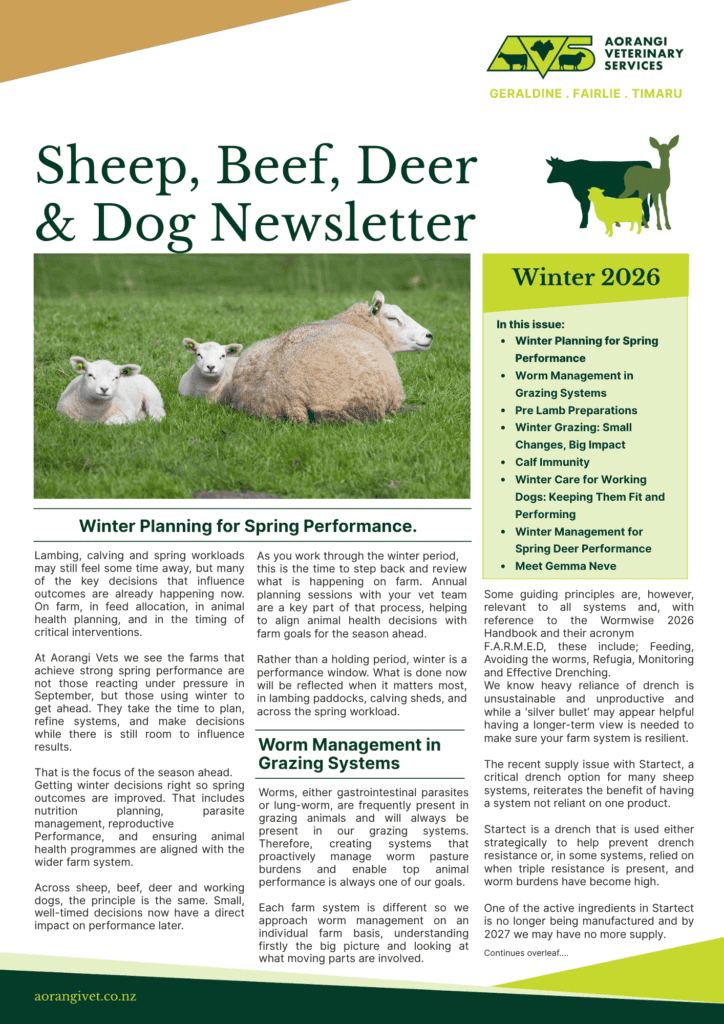
Winter Planning for Spring Performance.
Lambing, calving and spring workloads may still feel some time away, but many of the key decisions that influence outcomes are already happening now. Read our latest newsletter to find out more about how you can make the most of winter for strong performance come spring.
At Aorangi Vets, we consistently see that the farms achieving strong spring performance are not those reacting under pressure in September, but those using winter to get ahead. They take the time to plan, refine systems, and make decisions while there is still room to influence results.
That is the focus of this season. Getting winter decisions right so spring outcomes are improved – that includes nutrition planning, parasite management, reproductive performance, and ensuring animal health programmes are aligned with the wider farm system.
Across sheep, beef, deer, and working dogs, the principle is the same: small, well-timed decisions now have a direct impact on performance later.
As you work through the winter period, this is the time to step back and review what is happening on farm. Annual planning sessions with your vet team are a key part of that process, helping to align animal health decisions with farm goals for the season ahead.
Rather than a holding period, winter is a performance window. What is done now will be reflected when it matters most – in lambing paddocks, calving sheds, and across the spring workload.
Worm Management in Grazing Systems
Worms – whether gastrointestinal parasites or lung-worm – are frequently present in grazing animals and will always be present in our grazing systems. Creating systems that proactively manage worm pasture burdens and enable top animal performance is always one of our goals.
Each farm system is different, so we approach worm management on an individual farm basis, understanding firstly the big picture and looking at what moving parts are involved.
Some guiding principles are, however, relevant to all systems. With reference to the Wormwise 2026 Handbook and their acronym F.A.R.M.E.D, these include: Feeding, Avoiding the worms, Refugia, Monitoring, and Effective Drenching.
We know heavy reliance on drench is unsustainable and unproductive, and while a “silver bullet” may appear helpful, having a longer-term view is needed to make sure your farm system is resilient. Drench resistance is an increasing reality across Canterbury and South Canterbury drystock farms – a planned, system-based approach is the most effective long-term protection.
A note on Startect
The recent supply issue with Startect, a critical drench option for many sheep systems, reiterates the benefit of having a system not reliant on one product. Startect is a drench used either strategically to help prevent drench resistance, or in some systems relied on when triple resistance is present and worm burdens have become high.
One of the active ingredients in Startect is no longer being manufactured, and by 2027 we may have no more supply. While it is possible to replace Startect with another drench such as Zolvix Plus, our message around reliance on drench remains the same: don’t rely on drench.
Worm management is interwoven with the entire farm system. We can help best by dedicating time to discussing your system, identifying your goals, understanding what risks exist, and what levers can be pulled. Please contact us at the clinic to arrange a time to sit down with your vet to put a worm management plan in place.
Pre Lamb Preparations
Lambing is now a couple of months away for some of our farmers, and the critical pregnancy and pre-lamb period is where many of you will be focussing.
Feeding for pregnant ewes requirements is hugely influential of both ewe wastage and lamb survival. Studies in New Zealand continue to build on previous work where we now understand more about the role protein plays in a pregnant ewe’s diet.
After energy requirements are met, protein is the next most important building block. A pregnant ewe is building a lamb or lambs, and therefore especially during the last trimester of pregnancy she needs a diet not only giving at least 10MJ ME but also at least 14% protein.
The importance of protein becomes obvious when it is lacking. If a ewe loses weight due to a protein deficiency, the increased lamb losses double compared to if she lost weight due to an energy deficiency. Ewe wastage obviously also increases significantly as more ewes will die if they have gone lost weight during pregnancy.
Testing your winter feed is the way to know what you have on offer – enter a feed competition or call the vet clinic to organise testing.
Check ewe body condition as you push them up the race for scanning and pull out the light girls for preferential feeding.
Trace elements: selenium and copper
We recommend checking trace elements such as selenium and copper in pregnant ewes after scanning. While it is tempting to test dry ewes going to the works, they do not represent the pressure the pregnant ewes are under – meaning it is more accurate to have us collect liver biopsies and bloods on farm.
There is a high demand for copper and selenium in pregnant ewes, and the benefit of monitoring is to know whether supplements are needed and what levels supplements have achieved.
Multimin plus Copper for sheep is now being widely used in sheep flocks across our region and New Zealand as a pre-lamb supplementation. The results we are seeing reported in New Zealand are consistent with Australian data suggesting lamb survival is frequently up to 9% better. This improved lamb survival occurs in flocks which already had sufficient trace element levels – which perhaps reiterates the increased demand on trace elements during stressful periods such as lambing.
Vitamin E
Vitamin E deficiency due to a pregnant ewe’s diet can result in increased lamb deaths around birth. Diets potentially low in vitamin E include hay, silage, and brassicas. Diagnosis of vitamin E deficiency is based on lamb autopsy and lamb loss data collection.
The pioneering product Livestock Survival Drench, which contained vitamin E along with other essential vitamins and minerals, has been used successfully by farmers at pre-lamb for many years and is now no longer produced. We supply VetPak’s Healthy Ewe as our preferred alternative.
Pre-lamb drenching
Worm management in pregnant and lactating ewes hinges heavily on her body condition and the feed in front of her. For ewes in condition of 3.0 or more at the time of lambing and grazing a minimum of 1200kgDM/ha, we recommend not drenching pre-lamb. Light ewes and tight feed, among other things, present different situations, and long-acting drench options can be appropriate.
As always, we recommend faecal egg count (FEC) testing of ewes at tailing – especially if they had a long-acting pre-lamb drench.
Much of what we have covered here is about ewe wastage and lamb survival. Monitoring what your flock is achieving helps decision making – where do opportunities exist? We encourage you to make this part of the annual planning session with your vet, as these two factors have a huge impact on flock performance and over time can help validate decisions.
Winter Grazing: Small Changes, Big Impact
Winter grazing is a key part of many drystock systems, but it comes with real environmental and animal welfare risks if not managed carefully. Resources from Beef + Lamb New Zealand and Environment Canterbury highlight that simple, well-planned practices can make a big difference.
Wet conditions, soil damage, and stock concentration can lead to sediment, nutrient, and contaminant loss into waterways. This not only reduces paddock productivity but also impacts water quality downstream – an increasing focus for farmers across the Mackenzie Basin and South Canterbury under freshwater regulations.
What can you do?
Start by planning your grazing strategy early. Identify critical source areas (such as gullies, swales, and waterways) and keep stock out of these areas. Leaving good ground cover in these spots helps trap sediment and nutrients before they reach waterways.
Grazing direction also matters. On slopes, grazing from the top down reduces runoff risk, while long, narrow breaks encourage more even feed utilisation and reduce soil damage. Back fencing is another useful tool to protect previously grazed areas from pugging.
Stock management plays a role too. Providing dry lying areas, access to water, and adequate feed reduces unnecessary movement and soil impact. Positioning troughs and supplements in drier parts of paddocks can further minimise damage.
Finally, consider what happens after grazing. Resowing or planting a catch crop as soon as possible helps stabilise soil and reduce nutrient loss over winter.
The takeaway: good winter grazing isn’t about major changes – it’s about consistent, practical decisions that protect both your pasture and your environment.
Calf Immunity
Alongside genetics, nutrition, and good husbandry, immunity is a critical component of calf health and growth rates. However, it is not often discussed in the beef calf rearing sector until vaccinations are due, by which time calf health and growth rates may already be affected.
There are 3 types of immunity:
1. Innate – this refers to the naturally occurring methods of protection against disease and includes the physical barriers of skin and mucosa as well as special cells of the immune system that work to remove pathogens. In young calves, this system is underdeveloped.
2. Passive – this is the most important immunity for young calves, and can only be attained via consumption of sufficient high-quality colostrum during a 24-hour window after birth. Colostrum contains antibodies from the dam which are passed on to the calf, providing immunity for the first 2–4 weeks of life.
3. Active – this is the long-lasting immunity that calves can develop through vaccination or via natural exposure to diseases. This system begins to become more robust after passive immunity starts to wane.
Failure of Passive Transfer (FPT)
For young calves, we are most concerned about their passive immunity. If they did not receive sufficient colostrum during the key window, they may have a Failure of Passive Transfer (FPT). FPT doesn’t only put animals at risk of disease, but also contributes to reduced growth rates, sudden death, and ill-thrift that can persist past weaning.
For those buying young calves from dairy-beef sales, consideration of their immune status may be a useful tool to improve awareness of animal health and inform decisions to maximise calf growth. Whilst dairy farms are ideally following industry standards for colostrum management – Quickly, Quantity, Quality – we cannot know for certain that calves have received this best-practice level of care or whether they are at risk of FPT.
If you are wanting to know more about your calves’ immunity status there is blood testing available to measure antibody levels via measurement of total protein. If animals are found to have FPT, your vets can help implement strategies to mitigate risks and maximise health of your mob, as well as opening a discussion with the source about improving neonatal colostrum management.
Winter Care for Working Dogs: Keeping Them Fit and Performing
Winter conditions place extra demands on working dogs. Cold, wet weather increases energy requirements, affects recovery, and can impact performance if not managed appropriately. Small adjustments to feeding and care can make a significant difference.
Dogs require more energy in winter to maintain body condition and stay warm.
Diets should include:
- High-quality protein for muscle maintenance and recovery
- Adequate fat for energy and heat production
Dogs losing weight or condition are often underfed for the conditions, so regular monitoring is important.
Feeding practices play a key role in performance:
- Feed within 1–2 hours after work to support recovery
- Maintain consistent feeding, even on lighter work days
- Avoid meat-only diets unless properly balanced
- Well-fed dogs recover faster and are less prone to injury
Good housing reduces energy loss:
- Kennels should be dry, insulated, and draught-free
- Provide adequate bedding, especially for older dogs
Hydration is still critical in winter:
- Ensure access to clean, unfrozen water
- Monitor intake during busy work periods
Early signs of issues include:
- Weight loss or poor condition
- Reduced stamina
- Increased injuries or slower recovery
Winter places added pressure on working dogs, but with appropriate nutrition, shelter, and monitoring, they can continue to perform well. If you have concerns, contact your local vet clinic for advice tailored to your team, or ask about our Working Dog Premium Food Pallet Pre-Buy – offering great value and flexible collection options to help keep your dogs performing at their best this winter.
Winter Management for Spring Deer Performance
Wintertime can be tough on stock and farmers alike. A few timely practices can help get you and your animals through the winter and set you up for success next spring.
Hinds: Pregnancy scanning is a great opportunity to identify empty animals and get them off farm. When empty hinds go to the works, take the opportunity to test their livers for trace elements – particularly copper. Copper deficiencies are commonly identified across South Canterbury at this time of year and can lead to poor fertility and condition. Testing empty hinds not only gives you a clue as to why these animals might be performing poorly, but will also help give a picture of herd health and can help guide supplementation. Where needed, supplementation with products such as Copaject Injection or Multimin Evolution can help address deficiencies and improve performance.
Stags: After the roar, stags should receive a drench and trace element supplementation. Strategic use of products like Multimin Evolution around the time of button drop can support antler regrowth and general condition.
Yearlings: Yearlings are entering a critical growth phase – good management through winter, including balancing their feed properly, helps achieve winter weight gain and sets them up for success in spring. Parasite control is also key as these young animals are susceptible to both lung and gut worms. Low worm challenge feed is fundamental, as well as judicious use of drench. Cervidae is the triple combination oral drench with a 28-day meat withholding period.
Velveting: Now is also a good time to get your ducks in a row for velveting. Checking facilities ahead of the season is valuable as they will be looked at as part of your Supervisory Visit and/or Independent Audit. Ensure all Supervisory Visits are booked early in the season, and if you haven’t tried it already, have a go ordering velvet drugs online with us.
As always, get in touch with us at the clinic if you have any questions.
Meet Gemma Neve – Bringing Practical Experience to Our Drystock Team
From the Arctic wilderness to the hills of South Canterbury, veterinarian Gemma Neve brings a unique mix of hands-on animal experience, practical farm support, and a real passion for the outdoors to our drystock team.
Originally growing up between the UK and Australia, Gemma spent several years after school working with sled dogs in Finland and Alaska, guiding wilderness tours before helping train a long-distance racing team in the Arctic. It was overseas that she met her Kiwi partner, and together they eventually made the move to New Zealand where Gemma studied veterinary science at Massey University in Palmerston North.
Now based in Geraldine with her partner, children, and two dogs – including a retired sled dog and an energetic huntaway-heading dog puppy – Gemma has become a valued part of our team and a familiar face to many of our drystock clients.
Over recent months, Gemma has been involved in a wide range of farm work including:
- Beef pregnancy scanning training
- Ram palpations and Brucella ovis testing
- Blood testing including BVD and trace element work
- Beef and deer youngstock post-mortems
- Working dog care and treatment
Outside of work, you’ll usually find Gemma and her family making the most of the South Island lifestyle – skiing, hiking, camping, and exploring the mountains whenever they can.
We’re lucky to have Gemma’s practical experience, calm approach, and enthusiasm as part of the Aorangi Vets team. If you haven’t already met her out on farm, there’s a good chance you’ll see her around this season supporting our drystock clients across the region.
When should I start planning my pre-lamb nutrition programme?
Ideally at scanning time. This is when you can assess ewe body condition, pull out light ewes for preferential feeding, and arrange trace element testing. Getting bloods and liver biopsies done at this point – rather than on dry ewes at the works – gives a far more accurate picture of what pregnant ewes actually need heading into lambing.
How do I know if my farm needs a worm management plan?
If your flock or mob has had performance issues, unexpected deaths, or you’ve relied heavily on a single drench product, a worm management plan is worth prioritising. At Aorangi Vets we approach this on an individual farm basis – contact your nearest clinic to arrange a planning session with your vet.
What is Failure of Passive Transfer in calves, and how do I check for it?
Failure of Passive Transfer (FPT) occurs when a calf does not receive sufficient colostrum in the first 24 hours after birth, leaving it without adequate passive immunity. It contributes to reduced growth rates, increased disease risk, and ill-thrift past weaning. Blood testing to measure total protein levels is the most reliable way to confirm FPT – talk to your vet if you have concerns about bought-in dairy-beef calves.
What should I feed working dogs in winter to keep them performing?
Working dogs need more energy in cold conditions to stay warm and maintain performance. Feed a diet high in quality protein and fat, ideally within 1–2 hours of finishing work. Avoid meat-only diets unless they are properly balanced, and monitor body condition regularly. Ask us about the Working Dog Premium Food Pallet Pre-Buy for great-value bulk ordering this winter.
Should I drench ewes before lambing?
For ewes in good body condition (BCS 3.0 or above) with adequate pasture cover of at least 1200kgDM/ha, we generally recommend not drenching pre-lamb. Light ewes or ewes on tight feed may warrant a long-acting drench. Faecal egg count testing at tailing is always recommended, especially if ewes received a long-acting pre-lamb drench.
How should I prepare my deer herd for velveting season?
Start by checking your velveting facilities ahead of your Supervisory Visit, as they will be assessed as part of your audit. Book your Supervisory Visit early in the season. Ensure stags received post-roar trace element supplementation, and consider ordering velvet drugs online through Aorangi Vets.