
No Progress? When to Call the Vet During Calving
Posted in: Dairy Animal Services
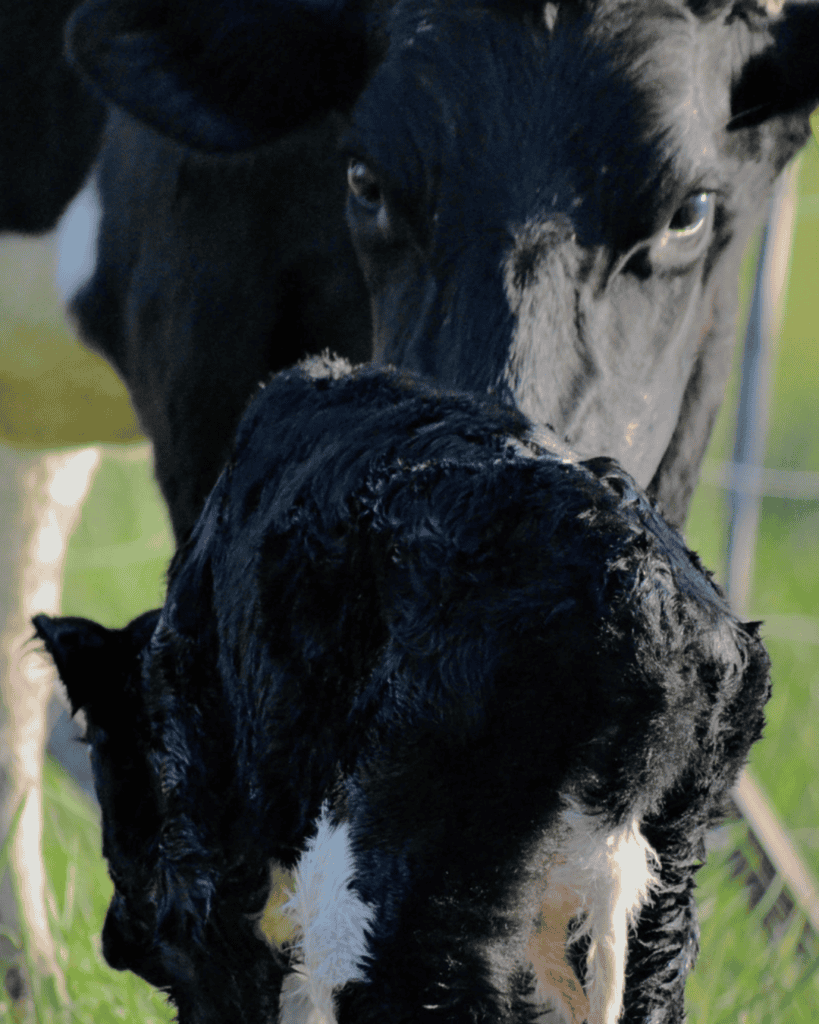
As a general guide, if a cow shows no real progress after approximately thirty minutes of active labour, veterinary assistance may be required.
Every calving presents differently, but this timeframe is a useful reference point for deciding when to seek support rather than continuing to wait.
We would always prefer an early call that proves unnecessary over one that comes too late.
Understanding the Stages of Labour
Calving generally moves through three stages. Stage one is the preparatory stage – restlessness, mucus discharge, and a cow seeking out a quiet spot (we’ve covered these early signs in a separate post). Stage two is active labour, where you’ll see visible straining, and typically the water bag or the calf’s feet appearing. Stage three is the delivery of the afterbirth, usually within a few hours of the calf arriving.
What Counts as “Active Labour”?
Active labour is the point where a cow is straining visibly and consistently – proper contractions, not just mild discomfort. You’ll usually see the water bag appear first, followed by the calf’s front feet and nose. This is the stage the thirty-minute guide applies to.
The Thirty-Minute Guide
Once a cow is in active labour – straining hard, with the water bag or feet visible – she should be making visible progress within about thirty minutes. If thirty minutes pass with no real change, that’s your cue to call rather than wait it out. Time matters here: a calf that’s stuck can run into trouble quickly, and a cow that keeps straining without progress will tire fast. This is a guide, not a strict rule – some calvings move faster, some slower – but it’s a solid reference point for making the call. A call costs nothing; a delayed call can cost a cow.
Signs a Calving Needs Help Sooner
A few situations are worth calling about straight away, regardless of timing:
- No feet visible despite strong, active straining
- Only one leg presenting, or a leg positioned back
- Head showing without feet, or feet without a head
- A cow that appears exhausted or has stopped straining altogether
- A first-calving heifer struggling more than expected
- Unusual bleeding or visible distress
- You can feel the calf, but the presentation is one you can’t correct yourself before pulling
- She’s just had an assisted calving and something doesn’t feel right – unusual bleeding or you’re worried about her
- She goes down after calving and won’t get up, even after treatment (could be milk fever or nerve damage)
- A prolapsed uterus – this always needs immediate attention
What to Have Ready When You Call
A quick rundown helps us help you faster:
- Roughly how long she’s been in active labour
- What you can see or feel, if you’ve already checked
- The cow’s general condition – energy, breathing, temperament
- Where she is on the property
We’d Rather Get the Early Call
Calving season keeps our farm vet team on the road across Geraldine, Timaru, and Fairlie, and we’d genuinely rather come out to a calving that sorts itself out than get a call once things have gone too far. If you’re not sure, that uncertainty is reason enough to ring.
Any questions, give us a call.
Timaru (Highfield) 03 687 9378 | Geraldine 03 693 1163 | Fairlie 03 685 8407
Frequently Asked Questions
How long should a cow be in labour before I worry?
Once she’s in active labour – visible, consistent straining with the water bag or feet showing – she should be making progress within around thirty minutes. No real progress after that is a good reason to call.
What does normal active labour look like?
Strong, regular straining, typically with the water bag appearing first, followed by the calf’s front feet and nose presenting correctly.
What if I can only see one leg, or no feet at all?
Call straight away. A missing or malpositioned leg, or straining with no feet visible, usually means the calf isn’t presenting correctly and will need assistance.
Is it normal for a first-calving heifer to take longer?
Heifers can take a little longer than older cows, but the same thirty-minute guide for active labour still applies – if she’s not progressing, it’s worth a call.
What should I tell the vet when I call?
How long she’s been in active labour, what you can see or feel if you’ve checked her, her general condition, and where she is on the property.